
Drill 2 · Odds
Betting Odds Explained: How Fractional and Decimal Odds Really Work
Updated 20 October 2026
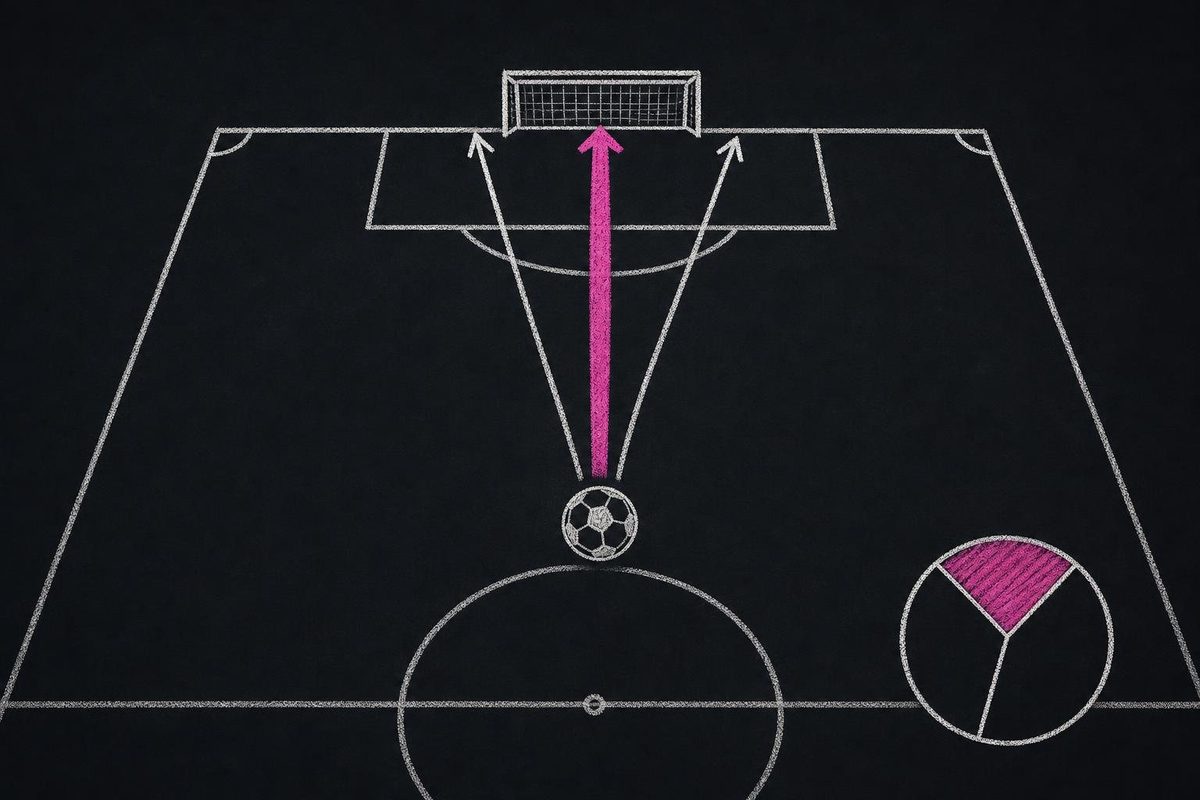
If you have ever asked “how do betting odds work?”, the answer is shorter than it looks. Odds only ever answer two questions: how much will this pay, and how likely does the bookmaker think it is? With the betting odds explained from both sides, a price like 13/5 stops being a puzzle and becomes a number you can compare, convert and question.
The odds converter further down this page turns any price into the other formats and its implied probability as you type. If you have ever wondered how to read betting odds without a calculator, the sections before it do the same thing by hand, so you can check a price in your head at the bar before the second half starts.
How do betting odds work?
Every price is a statement about payout and probability at the same time. Take Arsenal at 4/5 against Aston Villa. The payout part says a £5 stake earns £4 profit. The probability part says the bookmaker rates Arsenal’s chance at about 55.6%. Those two facts are linked by simple arithmetic, which is why you can move between them in either direction.
So, how do betting odds work in one line? The bigger the number, the less likely the outcome and the larger the payout. A price of 10/1 pays well because it rarely lands; a price of 1/4 pays little because it usually does.
Fractional odds: the UK standard
Fractional odds put the profit on the left and the stake on the right. At 5/2 you make £5 profit for every £2 staked; on a £10 bet that is £25 profit plus your £10 back, £35 in total.
A few fractions come up constantly in football:
| Fractional | Decimal | Implied probability | £10 returns |
|---|---|---|---|
| 1/2 | 1.50 | 66.7% | £15.00 |
| 4/5 | 1.80 | 55.6% | £18.00 |
| Evens (1/1) | 2.00 | 50.0% | £20.00 |
| 6/4 | 2.50 | 40.0% | £25.00 |
| 5/2 | 3.50 | 28.6% | £35.00 |
| 4/1 | 5.00 | 20.0% | £50.00 |
Prices with the larger number on the right, like 1/2 or 4/5, are odds-on: the outcome is rated more likely than not, and the profit is smaller than the stake. Anything with the larger number on the left is odds-against.
Decimal odds: easier sums
Decimal odds show the total return per £1 staked, including the stake. A price of 3.50 returns £3.50 for every £1, so a £10 bet returns £35, exactly the same as 5/2. To get the profit, subtract one: 3.50 means £2.50 profit per pound.
Most bettors who compare prices across several sites switch to decimals, because comparing 2.62 with 2.75 is easier than comparing 13/8 with 7/4. Every bookmaker on our list of football betting sites lets you change the format in the account settings.
How to read betting odds as a probability
To turn any price into the bookmaker’s implied probability, divide 1 by the decimal odds. At 2.50 that is 1 ÷ 2.5 = 0.40, or 40%. With fractions, divide the right-hand number by the sum of both: at 6/4, that is 4 ÷ (6 + 4) = 40%.
This is the most useful habit in football betting, because it lets you ask the right question. If you think a team wins this match more often than 40% of the time, a price of 6/4 looks generous. If you think it is less, the price is short, however tempting the payout. Learning how to read betting odds this way also makes the odds converter results above easy to sanity-check.
The bookmaker’s margin, explained with real numbers
Add up the implied probabilities for all three outcomes of a match and the total is always above 100%. Using the Arsenal example from our how to bet on football guide:
- Arsenal 4/5 → 55.6%
- Draw 13/5 → 27.8%
- Aston Villa 7/2 → 22.2%
The total is 105.6%. The extra 5.6% is the bookmaker’s margin, sometimes called the overround. It is how a bookmaker makes money over thousands of bets regardless of the result, and it varies between bookmakers and markets. Popular markets like the Premier League match result usually carry lower margins than niche ones like a named player to be booked.
Every format below is just another way of writing the same thing, which is why betting odds explained once stay explained.
American odds, briefly
US sites and some statistics pages show odds such as +150 or −125. A plus sign shows the profit on a $100 stake (+150 = 2.50 decimal); a minus sign shows the stake needed to make $100 profit (−125 = 1.80 decimal). UK bookmakers rarely use them, but the odds converter handles them in case a stats site you follow does.
Odds converter
Type a price in any box. The others, and the implied probability, update as you type.
Implied probability
55.6%
Return on a £10 stake
£18.00
Betting odds explained: a quick check before you bet
Before confirming a bet, run three checks. Convert the price to a probability and ask whether you rate the outcome more likely than that. Compare the same price at another bookmaker, since a move from 2.50 to 2.62 is almost 5% more return for nothing. And look at what the bet slip says you will receive, because that, not the number in your head, is what settles.
That is betting odds explained in full: a payout, a probability and a margin. The rest is opinion about football.